
You walk into your Miami living room and find a puddle spreading under your air handler. Your first thought is panic, your second is “why is my AC leaking water?” The most common reasons an air conditioner leaks water are a clogged condensate drain line, a dirty air filter, a frozen evaporator coil, low refrigerant, or a damaged drain pan. In Miami’s humidity, a clogged drain line causes the majority of indoor leaks because algae grow quickly inside the PVC drain pipe.
The first thing you should do is switch your thermostat to “Off” to stop more water from forming. From there, the cause determines whether this is a quick DIY fix or a same-day service call. This guide walks you through every cause, how to diagnose it, what repairs cost in Miami, and when the leak signals it’s time to replace the unit instead of repair it.
Acting within the first 24 hours matters here more than in any other state. Florida’s warm, humid air can begin growing mold in soaked drywall in as little as 24 to 48 hours, which turns a $150 drain line repair into a multi-thousand-dollar restoration claim.
How Your AC Produces Water in the First Place
Your air conditioner doesn’t just cool air, it also pulls moisture out of it. Warm, humid Miami air passes over a cold evaporator coil inside your indoor unit, and water condenses on the coil exactly the way droplets form on a cold glass of iced tea on a hot afternoon. That water drips into a drain pan beneath the coil, then flows out of your home through a white PVC pipe called the condensate drain line.
The volume of water this process generates surprises most homeowners. A properly sized 3-ton residential AC running in Miami’s summer humidity can pull 2 to 5 gallons of water per hour out of indoor air. Over a single day, that’s enough to fill a kitchen sink. Every gallon of it has to drain somewhere. When any part of that drainage pathway breaks down, the water has nowhere to go but onto your floor, into your drywall, or down through a ceiling.
A small amount of dripping at the outdoor condensate exit pipe is normal and expected. Water inside your home, around your air handler, or staining a ceiling below an attic unit is not normal and should be treated as urgent.
7 Reasons Your AC Is Leaking Water
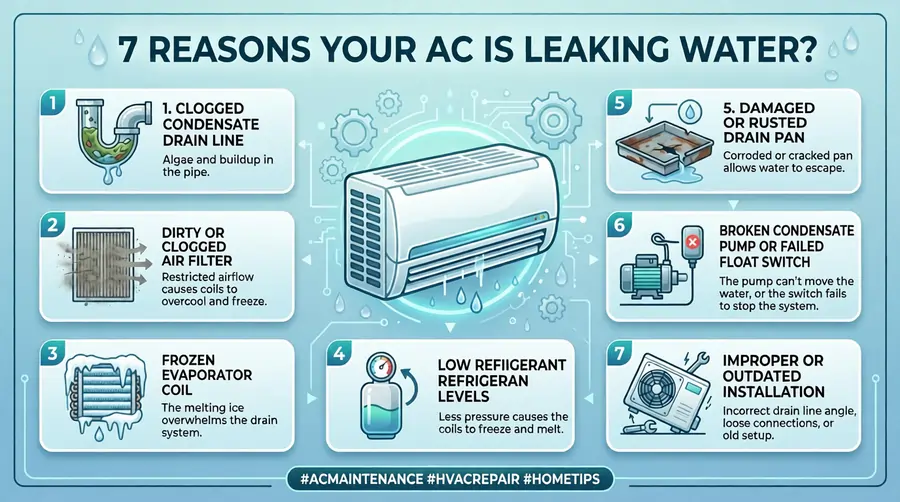
Air conditioner leaks happen because something is interfering with the drainage pathway, freezing the coil, or damaging the components that hold and move the water. Here are the seven causes Miami HVAC technicians diagnose most often, ranked by how frequently we see them in South Florida homes.
1. Clogged Condensate Drain Line (The #1 Miami Cause)
A clogged condensate drain line is the cause behind most AC water leak calls in Miami. The drain line is a 3/4-inch PVC pipe that carries condensate water from the drain pan out of your home. In Florida’s warm, damp environment, algae and biofilm grow inside this pipe almost continuously. Without regular treatment, that growth turns into a complete blockage in months, not years.
When the drain line clogs, water backs up into the drain pan, fills it past its capacity, and overflows directly onto your floor or into your ceiling. You may also hear a gurgling sound from the indoor unit just before the leak appears. This is one of the fastest repairs in HVAC, and it’s usually solved with a professional AC drain line cleaning service that uses a wet-vac at the outdoor exit and pressurized nitrogen to clear the line completely.
2. Dirty or Clogged Air Filter
A dirty air filter starves your evaporator coil of the airflow it needs to operate at the right temperature. With airflow restricted, the coil gets too cold, condensation freezes onto it, and ice builds up. When that ice melts, often hours later when the system cycles off, it produces a sudden flood of water that overwhelms the drain pan.
Filters in Miami homes get dirty faster than the national average because of higher dust loads, salt air, and continuous AC runtime. Every one to three months is the right replacement interval here, sometimes monthly during peak summer or if you have pets. A clogged filter is also one of the most common reasons a brand-new AC starts leaking within a year.
3. Frozen Evaporator Coil
A frozen evaporator coil produces leaks the same way a forgotten ice pack does on a kitchen counter, slowly at first, then all at once. Coils freeze for two main reasons: restricted airflow (usually a dirty filter or blocked return vent) or low refrigerant pressure (a refrigerant leak somewhere in the system).
If you open your air handler and see a coil covered in ice or frost, do not chip at it. Switch the system to “Off,” set the fan to “On” to help the coil thaw, and call a technician. Running the system with a frozen coil can permanently damage the compressor, which is the single most expensive component in your AC.
4. Low Refrigerant Levels
Refrigerant doesn’t get “used up” in a healthy AC, so if your levels are low, your system has a leak. Low refrigerant lowers the pressure inside your evaporator coil, which makes the coil run colder than it should and freeze. As the ice eventually melts, the resulting water swamps the drain pan and leaks into your home.
Refrigerant work is regulated by federal law and requires an EPA Section 608 certified technician. A licensed pro will pinpoint the leak, repair it, and recharge the system to manufacturer specifications. If you suspect a refrigerant problem, our air conditioner refrigerant leak repair team handles diagnosis and recharge in a single visit.
5. Damaged or Rusted Drain Pan
The drain pan sits directly beneath the evaporator coil and catches every drop of condensation. Older systems, typically those over 10 to 12 years old, develop rust, corrosion, or hairline cracks in the pan. Salt air in coastal Miami neighborhoods accelerates this corrosion noticeably compared to inland units.
You can spot a failed pan by looking for visible rust, water dripping directly under the unit (not from the drain line), or a leak that continues even after the drain line is cleared. Sealants can patch minor cracks temporarily, but a rusted pan needs full replacement. If your system is in this age range, a damaged pan is often a signal that other components are aging as well.
6. Broken Condensate Pump or Failed Float Switch
Some Miami homes, especially condos and units installed below grade, use a small condensate pump to push water uphill into a drain. When that pump fails (motor burnout, clogged impeller, or stuck float), the water has nowhere to go and immediately overflows.
The float switch is a related component most homeowners don’t know exists. It’s a safety device that shuts your AC off when water rises too high in the drain pan, preventing exactly the kind of leak you’re experiencing. If your system kept leaking instead of shutting itself down, the float switch is either missing, disconnected, or stuck. Adding or replacing one is inexpensive and protects your home from much larger water damage events down the road.
7. Improper or Outdated Installation
An AC installed at the wrong angle, with an undersized drain line, or with the condensate connections reversed will leak from day one and keep leaking until it’s reinstalled correctly. We see this most often with units installed by handymen, unlicensed contractors, or out-of-state crews unfamiliar with Florida humidity loads.
Signs of installation issues include leaks that started immediately after a new install, water that leaks no matter how often the drain line is cleared, or visible tilting of the air handler. Florida code requires HVAC work to be performed under a licensed contractor (Florida State License). A correctly installed system in Miami should run for years without producing a single drop of water inside your home.
Why AC Water Leaks Are Worse in Miami Than Anywhere Else
Miami’s climate creates conditions that make AC water leaks more frequent, more damaging, and faster to escalate than in almost any other U.S. market. Three factors stack on top of each other: extreme humidity, near-continuous runtime, and accelerated mold growth.
On a typical August day in Miami, outdoor humidity runs 75% to 90%. Your AC is removing 2 to 3 times more water from the air than the same unit would in a drier climate like Phoenix or Denver. The drain pathway has to handle every gallon of it. A drain line that would never clog in a drier climate clogs predictably in Miami because algae thrive in warm, wet PVC pipes.
Miami AC systems also run far more hours per year than national averages. Many condos and homes run their AC continuously from April through November and intermittently through winter. That continuous runtime means continuous condensation, continuous algae growth, and very little dry time for the drain line to “rest.”
The hurricane season adds another layer. Power outages, voltage surges, and prolonged downtime during storms can damage condensate pumps, cause coil freeze-ups when systems restart, and overwhelm drain lines that haven’t been cleared. After every named storm, Miami HVAC companies see a wave of leak calls within a week.
Most importantly, mold can begin growing in soaked drywall, insulation, and flooring within 24 to 48 hours in Miami’s warm, humid indoor conditions. That timeline is faster than in cooler or drier states. A leak you address the day you find it is a repair. A leak you address a week later is often a remediation project with a separate contractor.
Is It Safe to Run My AC When It’s Leaking Water?
No, you should not continue running an AC that is actively leaking water. Switch the thermostat to “Off” immediately. Running the system continues to produce condensate, worsens the leak, can damage the compressor if a coil is frozen, and creates an electrical hazard if water reaches the control board. Soak up standing water, then schedule a diagnostic visit the same day if possible.
How to Fix an AC Leaking Water: Step-by-Step
Some AC water leaks are safe for a confident homeowner to handle. Others need a licensed technician. Start with the steps below and stop at any point the issue exceeds your comfort level. Refrigerant work, electrical work, and any repair involving the evaporator coil should always be left to a professional.
Step 1: Turn the System Off Completely
Switch your thermostat from “Cool” to “Off.” If water is anywhere near electrical components, also flip the AC’s breaker at the main panel. This stops new condensate from forming and removes the electrical hazard before you touch anything.
Step 2: Contain the Water Damage
Place towels and a bucket under any active drips. Soak up standing water with a wet/dry vac if you have one. Move furniture, electronics, and rugs out of the affected area. Every minute water sits in Miami flooring is a minute closer to mold growth.
Step 3: Inspect and Replace the Air Filter
Locate your filter (usually in a return air vent or at the air handler intake). If it’s grey, dusty, or you can’t see light through it, replace it with a new filter of the correct size and MERV rating. A clean filter alone resolves a surprising number of leak calls.
Step 4: Clear the Condensate Drain Line
Find the drain line outside your home, typically a white PVC pipe sticking out of an exterior wall near the indoor unit’s location. Connect a wet/dry vacuum to the open end (duct tape helps create a seal) and run it for two to three minutes to suck the clog out. Then locate the indoor access port (a T-shaped vent on the line) and pour one cup of distilled white vinegar in. Wait 30 minutes, then flush with water. Repeat this monthly during summer to prevent future clogs.
Step 5: Inspect the Drain Pan and Float Switch
Open your air handler’s access panel and look at the drain pan. Visible rust, cracks, or standing water that won’t drain even after Step 4 indicates the pan is failing. Also check whether your system has a float switch installed. If it doesn’t, ask your technician about adding one during your next visit. It’s an inexpensive part that prevents most major leak events.
When to Call a Miami HVAC Professional
Some leaks can’t be solved with a wet/dry vacuum and a vinegar flush. Call a licensed Miami HVAC technician immediately if any of the following apply: water is dripping from a ceiling, the leak returns within 24 hours of clearing the drain line, you see ice on the evaporator coil, the system is making hissing or bubbling sounds (a refrigerant leak symptom), the unit is over 10 years old, or you suspect installation is the cause.
Refrigerant leaks always require a professional, both because federal law restricts refrigerant handling to EPA-certified technicians and because a leak you don’t fully repair will keep coming back. Same goes for cracked or rusted drain pans, which require partial system disassembly to access. Our AC repair Miami team offers same-day service across Miami, Miami Beach, Coral Gables, Hialeah, Kendall, and surrounding areas.
How Much Does AC Leak Repair Cost in Miami?
Repair pricing depends entirely on the cause. Below are the typical Miami market ranges for the most common AC leak repairs in 2026, based on standard licensed contractor service rates.
- Drain line clearing (most common fix): $100 to $250
- Air filter replacement: $20 to $80 (depending on filter type)
- Float switch installation: $100 to $200
- Condensate pump replacement: $200 to $450
- Drain pan replacement: $250 to $600
- Refrigerant leak repair and recharge: $300 to $1,500+ (depending on leak location and refrigerant type)
- Evaporator coil replacement: $1,000 to $2,800
- Full system replacement: $4,500 to $9,000+
Diagnostic visits in Miami typically range from $79 to $129 and are often credited toward the repair if you proceed with service the same day. For larger jobs like coil or full system replacement, flexible financing options can spread the cost over manageable monthly payments.
Repair vs. Replace: Is the Leak a Sign It’s Time for a New AC?
If your AC is under 10 years old and the leak is from a clogged drain, dirty filter, or worn float switch, repair is almost always the right answer. The system has plenty of useful life left and the fix is inexpensive relative to replacement.
The repair-or-replace conversation gets harder when your unit is 12 to 15 years old, the drain pan or evaporator coil is the failure point, the system uses R-22 refrigerant (no longer manufactured, very expensive when available), or you’ve had multiple repairs in the same year. At that point, the math often favors replacement: a new high-efficiency unit cuts your Miami summer electric bill measurably, comes with a 10-year manufacturer warranty, and eliminates the cascade of aging-component failures you’ll otherwise face one by one.
A useful rule of thumb: if the repair quote exceeds 50% of replacement cost and the unit is older than 10 years, replacement is usually the better long-term decision. Our team provides honest assessments at every visit and never pushes replacement when repair is the right call. If you do decide to upgrade, our AC installation in Miami service includes proper sizing, code-compliant drain line installation, and float switch protection by default.
How to Prevent Your AC from Leaking Water
Most AC water leaks in Miami are preventable with a routine that takes less than an hour per month plus one annual professional visit. Miami’s climate doesn’t give you the option to skip maintenance the way drier markets do.
- Replace your air filter every 1 to 3 months during summer, more often if you have pets or run the AC continuously.
- Pour 1 cup of distilled white vinegar into the condensate drain access port every month from May through October.
- Schedule professional AC maintenance once per year, ideally in spring before peak season. A tune-up clears the drain line, checks refrigerant pressure, inspects the drain pan, and tests the float switch.
- Keep the area around your indoor unit dry and accessible so you can spot small leaks before they become floor or ceiling damage.
- Install a float switch if your system doesn’t already have one. It’s the single best $150 investment you can make in your home’s water-damage protection.
- Have your unit inspected after every named storm, especially if power was out for more than 24 hours.
An annual AC maintenance and tune-up visit costs $100 to $200 in the Miami market and pays for itself the first time it prevents a drain line clog, frozen coil, or refrigerant leak from escalating into a major repair.
Frequently Asked Questions
Why is my AC leaking water all of a sudden?
A sudden AC water leak almost always means a clogged condensate drain line, especially in Miami where algae build up quickly inside the PVC pipe. Less common sudden causes include a dirty filter that finally restricted enough airflow to freeze the coil, a tripped or failed float switch, or a refrigerant leak that has just dropped below the system’s operating threshold.
Can a dirty filter really cause my AC to leak?
Yes, and it’s one of the most common indirect causes. A clogged filter restricts airflow over the evaporator coil, which causes the coil temperature to drop low enough to freeze condensation on its surface. When that ice eventually melts, it produces far more water than the drain pan can hold, leading to overflow leaks inside your home.
How long before AC water leaks cause mold?
In Miami’s warm, humid indoor environment, mold can begin growing in soaked drywall, insulation, carpet padding, or wood subfloor in as little as 24 to 48 hours. This timeline is significantly faster than in drier or cooler states. Address any indoor AC water leak the same day you find it to avoid mold remediation costs that can run into the thousands.
Does homeowners insurance cover AC water damage in Florida?
Most Florida homeowners policies cover sudden and accidental water damage caused by an AC leak, but they exclude damage caused by long-term neglect or lack of maintenance. Documentation matters. Take photos immediately, keep receipts for any emergency repairs, and have a licensed HVAC technician document the cause in writing. For larger claims, a public adjuster can help you navigate the insurance process.
How often should I have my AC serviced in Miami?
Miami’s climate calls for at least one professional AC tune-up per year, ideally in spring before the system enters peak summer load. Many manufacturers also require annual maintenance to keep the warranty valid. Many Miami HVAC companies (including ours) offer twice-yearly maintenance plans that catch drain line algae, refrigerant pressure changes, and aging components early before they become leak events.
Stop Your AC Leak Before It Becomes Water Damage
An air conditioner leaking water is rarely just a small inconvenience in Miami. The combination of high humidity, fast mold growth, and continuous AC runtime means a leak you ignore today is a much larger problem next week. The good news is that most causes (clogged drain lines, dirty filters, missing float switches) are inexpensive fixes when caught early. The expensive ones become avoidable with one annual maintenance visit.
If your AC is leaking water and you’d rather have a Florida-licensed technician handle the diagnosis the same day, Miami HVAC Experts provides emergency leak repair, drain line cleaning, and full system inspection across Miami-Dade. Call us, or schedule online through our contact page and a technician can be at your door today.